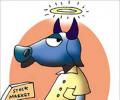
One may see five or six trend failures in succession before a trend sustains and takes off.

Akbar is rumoured to have once asked the navratnas of his court what the greatest pleasure in the world was. The stock answers came back: wealth, power, women, food, wine and so on, with the emperor's own contribution being hunting. Birbal was the outlier; he asserted that the greatest pleasure in the world was surely a good bowel movement.

In a bear market, prices may be irrationally depressed. In that case, an investor can identify mis-pricing, invest with a safety margin and wait. Since values are low, the risk is also low.
.jpg)
The latest macro-economic numbers confirm the economy trundles along in a low growth trajectory, while inflation climbs.
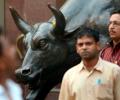
One could buy stocks cheap, sell if the market rises or do nothing. All these decisions would be correct.

Asset sales have helped ease investors' worry but debt remains at alarming levels

Timing is crucial for a short-sell, so is an understanding of likely float.

Debt returns are always negative for investors in India, unless they are willing to take huge risk

If government statistics are at variance with private data flow, chances are high that the latter presents a picture closer to reality.

Short sellers may capitalise on the weak sentiment owing to the dispute between co-founders Rana Kapoor and Madhu Kapur.

Though three stocks offer higher leverage via derivatives, be ready for some volatility.

The airline business has eaten up capital over the past century like almost no other business.

The main driver remains expectations of a big rate cut in the May 3 credit policy review, but stocks like Hind Unilever and ITC have also seen heavy buying.

Going long on Budget day announcement can go horribly wrong.

The combined market capitalisation of the two listed companies of the Sahara group whose assets have been ordered frozen by the Securities and Exchnage Board of India is just Rs 230 crore.

Interview with CMD, Motilal Oswal Financial Services

The economy could rebound if the right policy decisions are taken and implemented quickly

This time its international business is in the limelight.

Q3 results by most heavyweights will fragment the market with share prices in different sectors aligning in different directions

Given that there are number of state elections leading up to the national election in 2014, the government is unlikely to take hard decisions.
